- Home
- About us
- Products
- Faqs
- Enterprise FAQ
- Product FAQ
- Service FAQ
- Custom FAQ
- Production, Craftsmanship & QC
- Pricing & Payment Terms
- Logistics, Lead Time & Supply Chain
- Brand Collaboration & Case Study
- Small Batch & Flexible Production
- Collection FAQ
- Knowledge FAQ--Hybrid Training Wear
- Knowledge FAQ--Training Shorts Collection
- HUCAI activewear Homepage FAQ
- News
- Certificate
- Contact us
Engineering Breathable Cooling T-Shirts Manufacturer for High-Output Training Brands
publisher然
time2026/02/15
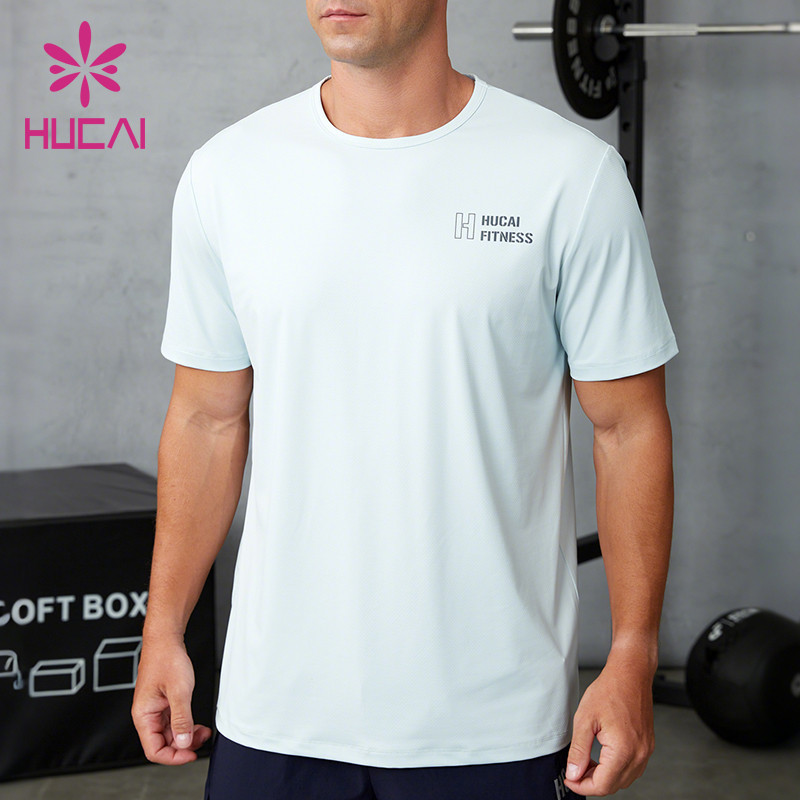
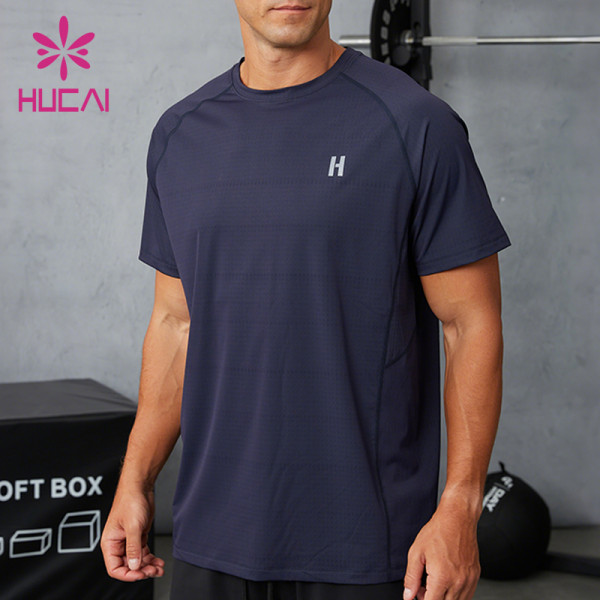
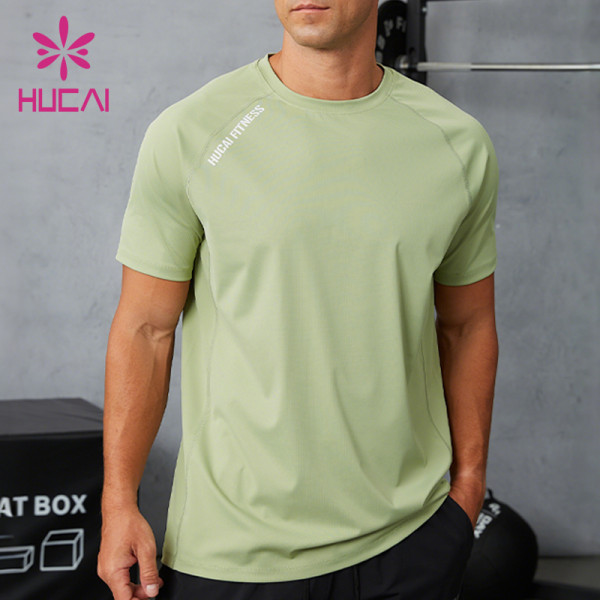
- HUCAI presents a lightweight cooling performance T-shirt engineered for high-heat and high-output training environments. This article explores how HUCAI integrates moisture-wicking knit structure, sweat-mapped breathability, and bulk production stability to support scalable men's activewear programs in warm-climate markets.
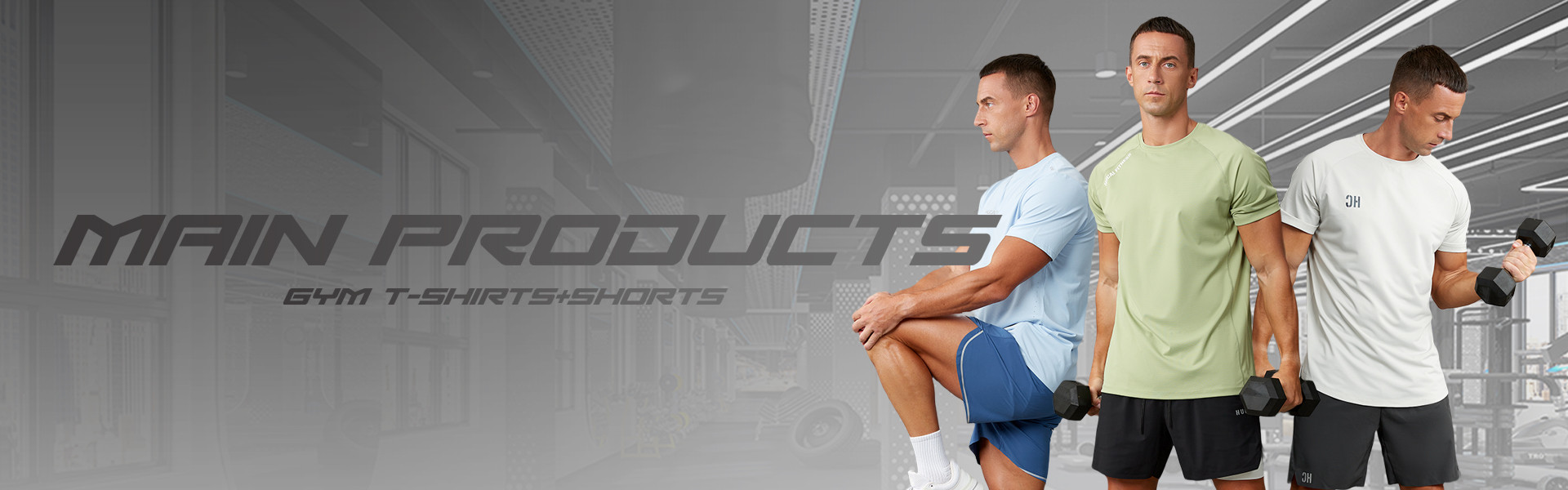
HUCAI presents a lightweight cooling performance T-shirt engineered for high-heat and high-output training environments. This article explores how HUCAI integrates moisture-wicking knit structure, sweat-mapped breathability, and bulk production stability to support scalable men's activewear programs in warm-climate markets.
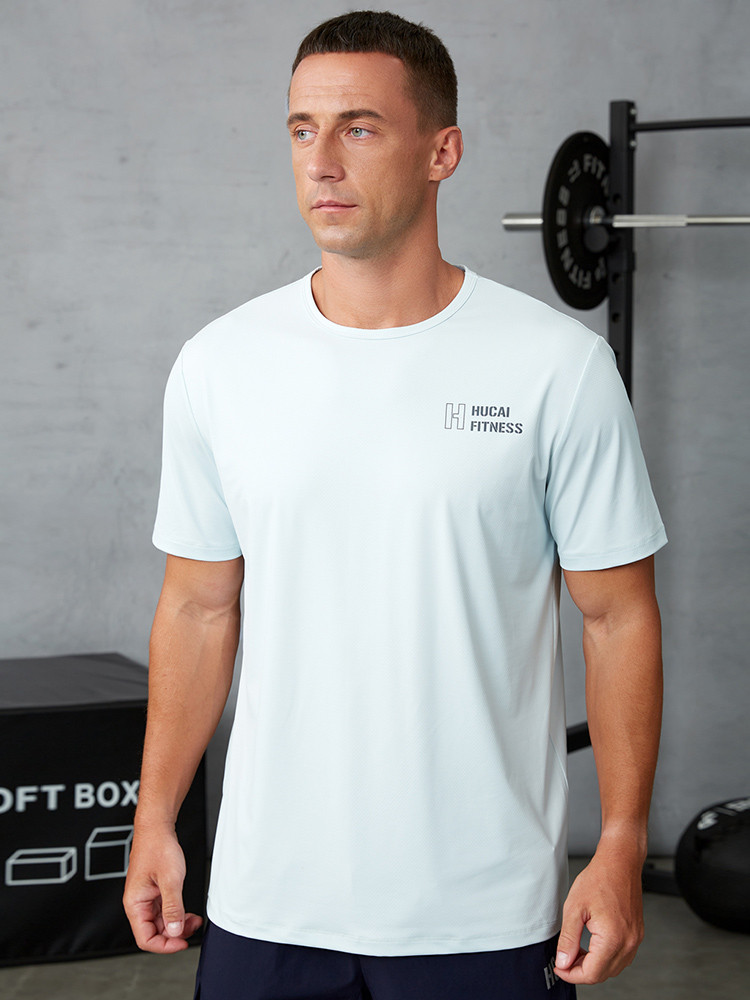
Fabric & Design
Fabric:
87%nylon 13%spandex
Design:
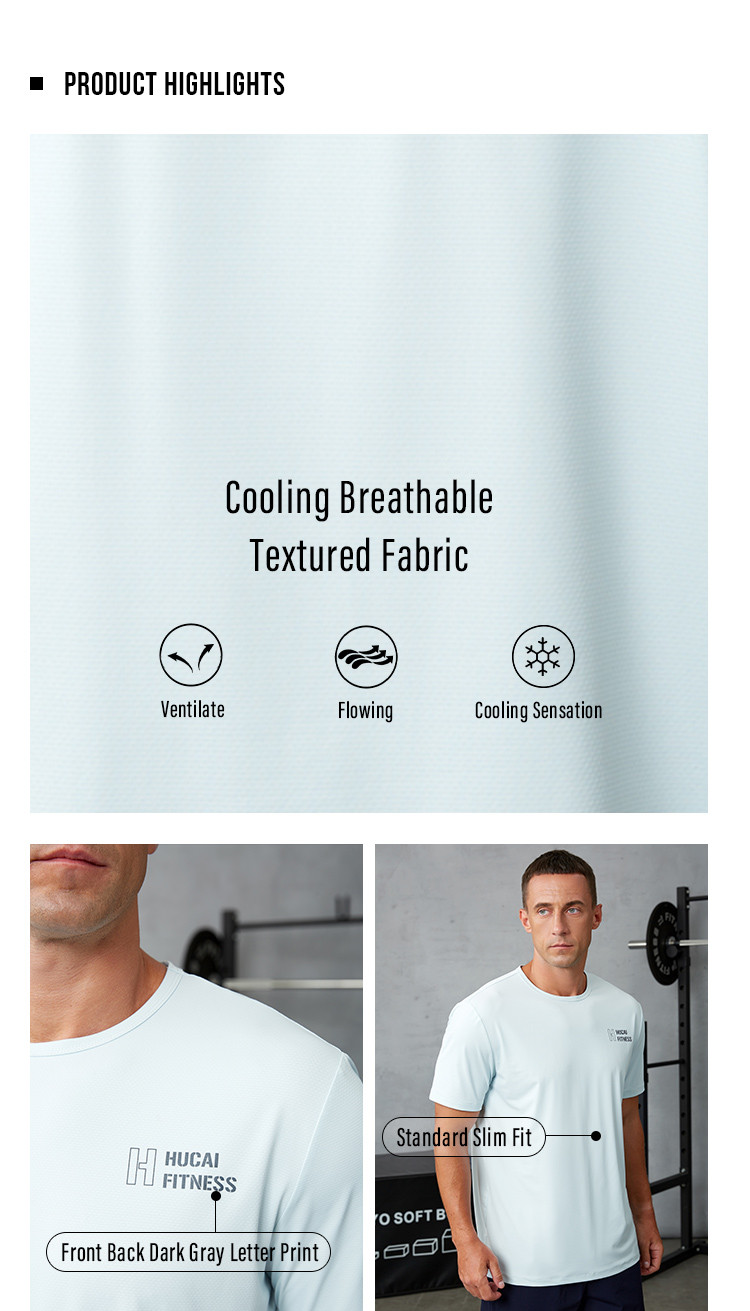
-Cooling Breathable Textured Fabric
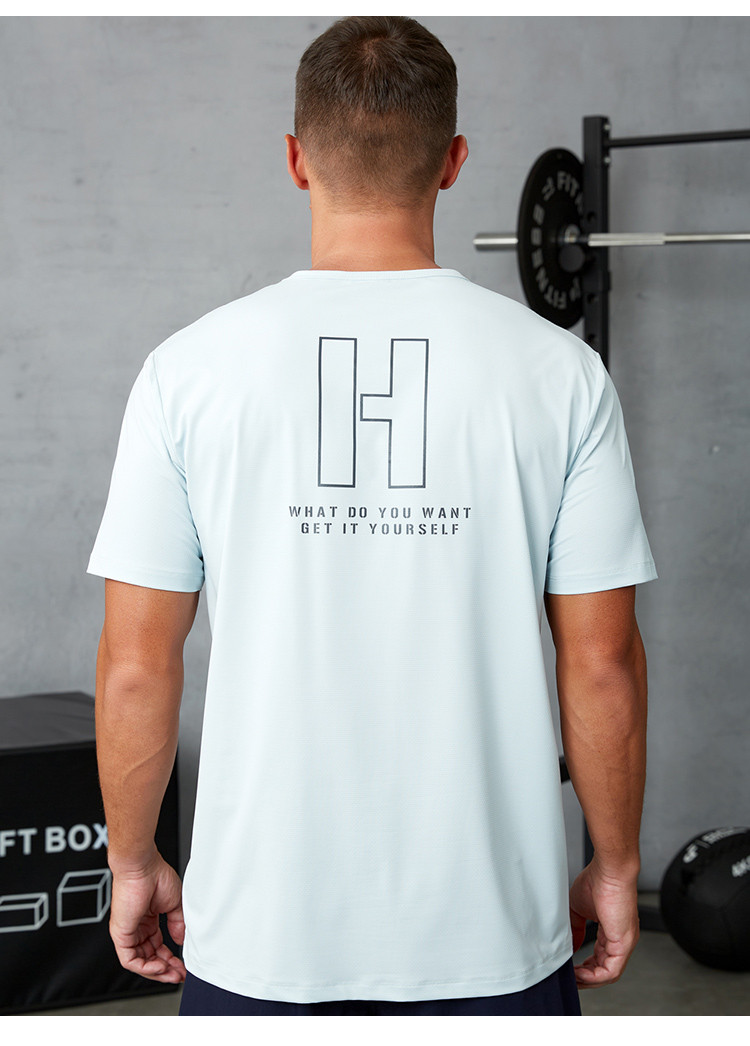
-Front Back Dark Gray Letter Print
-Standard Slim Fit
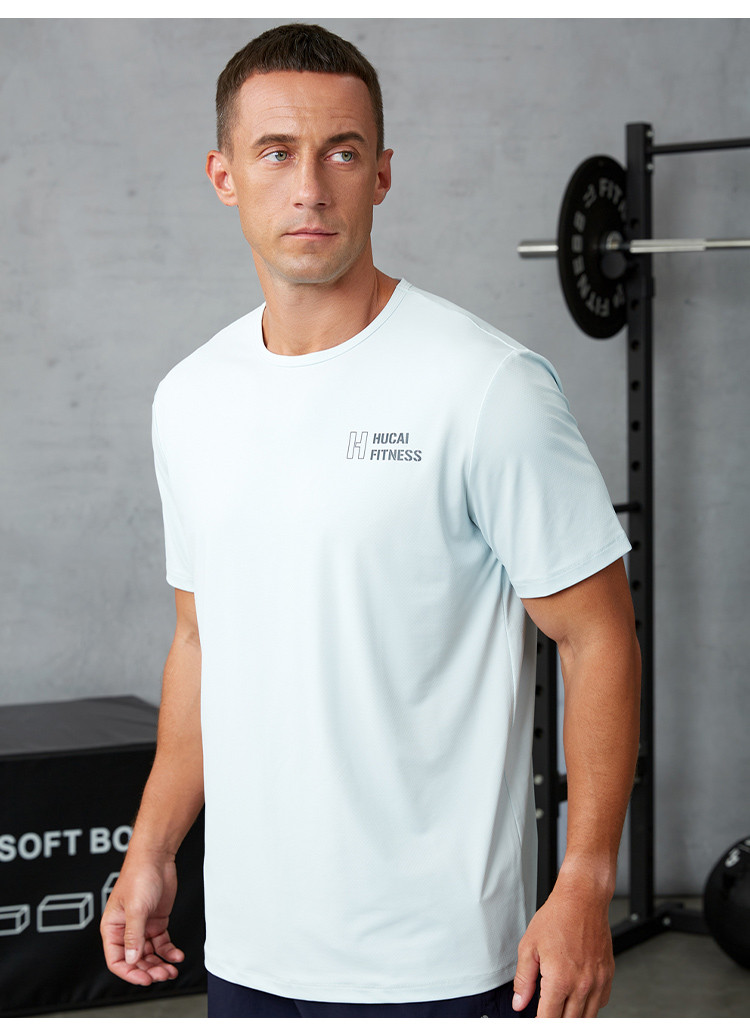
Suitable Contextual Use
-High-output interval training (HIIT, circuit conditioning)
-Summer outdoor running in humid climates
-Indoor gym sessions with limited airflow
-Travel-friendly training capsules
-Brand summer core-performance programs
Functional Capabilities
-Lightweight polyester-based performance knit
-Engineered moisture-wicking yarn structure
-Fast evaporation surface for heat release
-Reduced fabric density to minimize thermal load
-Structured shoulder fit to prevent drag during dynamic arm swings
Target Consumer
-Endurance-oriented male athletes prioritizing thermal regulation
-Urban runners training in high-humidity regions
-Consumers sensitive to fabric cling during sweat saturation
-Buyers preferring functional minimalism over graphic-heavy designs
Comparable Industry Example
A relevant comparison is the Metal Vent Tech Short Sleeve Shirt by lululemon. That product gained strong traction because:
1.It integrates breathable knit zones mapped to sweat areas
2.Minimal-seam construction reduces friction
3.Lightweight performance feel enhances perceived cooling
4.Consistent durability across repeated high-intensity sessions
Its commercial success came from combining functional sweat management with structural stability and repeatability in bulk production.
Sweat Mapping & Cooling Efficiency
Sweat-mapping research in performance apparel indicates that male perspiration during high-intensity exercise concentrates along the central back panel, underarm zones, and upper chest, with moisture production rates increasing significantly in humid environments. Textile performance standards such as ASTM D737 (air permeability testing) and moisture management studies cited in industry analyses show that lightweight polyester knits with optimized yarn cross-sections improve air permeability and accelerate evaporation compared to heavier cotton blends. By reducing fabric density while maintaining structural shoulder alignment, cooling T-shirts lower perceived thermal burden without compromising motion control. Effective sweat mapping requires calibrated knit openness in high-output zones while preserving dimensional stability in stress areas, ensuring both thermoregulation and silhouette retention during dynamic training.
How to contact us
➡️ Contact HUCAI today for your custom outerwear solution and connect with a team committed to premium quality and authenticity.