- Home
- About us
- Products
- Faqs
- Enterprise FAQ
- Product FAQ
- Service FAQ
- Custom FAQ
- Production, Craftsmanship & QC
- Pricing & Payment Terms
- Logistics, Lead Time & Supply Chain
- Brand Collaboration & Case Study
- Small Batch & Flexible Production
- Collection FAQ
- Knowledge FAQ--Hybrid Training Wear
- Knowledge FAQ--Training Shorts Collection
- HUCAI activewear Homepage FAQ
- News
- Certificate
- Contact us
Why Vintage Snow Wash Hoodies Are Becoming a Key Item in Performance Training Collections
publisher然
time2026/02/13
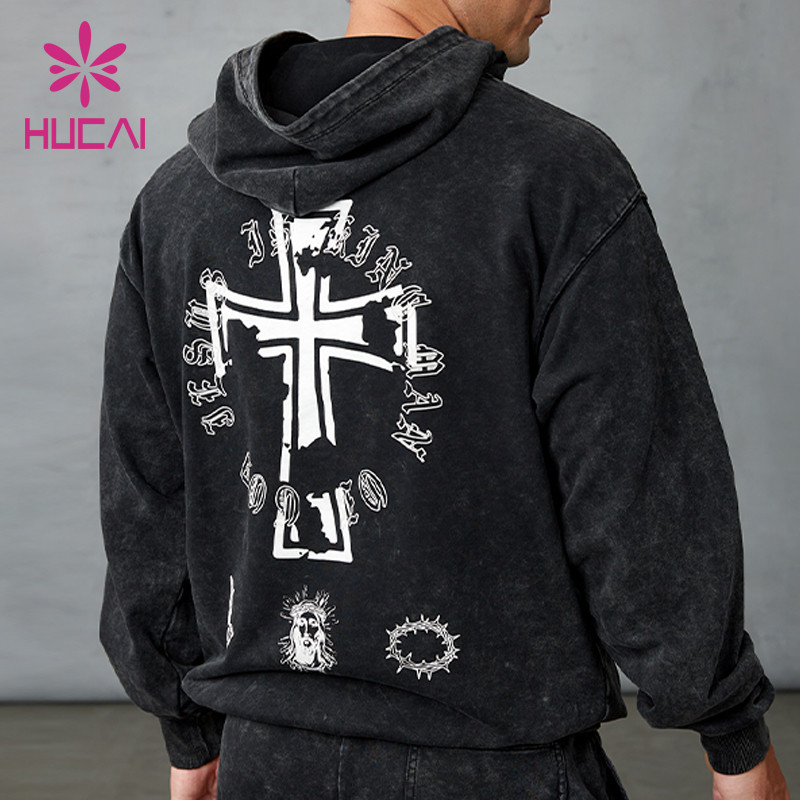
- HUCAI presents a vintage snow-wash men's hoodie engineered for structured layering and recovery-focused training programs. This article outlines its mid-weight cotton knit construction, garment-wash finishing process, and the technical controls required to maintain color consistency and fabric stability in bulk production.
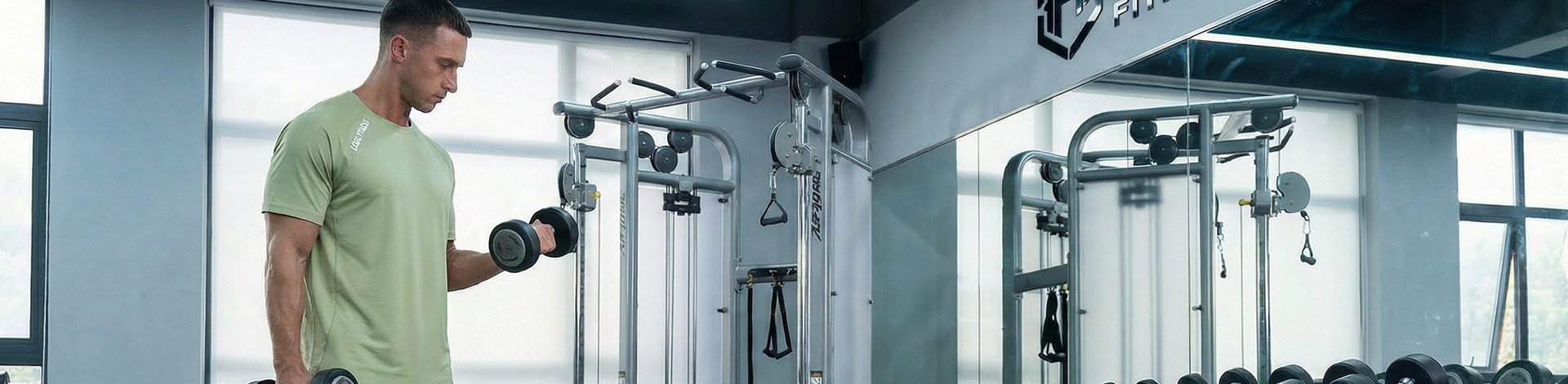
HUCAI presents a vintage snow-wash men's hoodie engineered for structured layering and recovery-focused training programs. This article outlines its mid-weight cotton knit construction, garment-wash finishing process, and the technical controls required to maintain color consistency and fabric stability in bulk production.
Fabric & Design
Fabric:
85%cotton 15%polyester
Design:
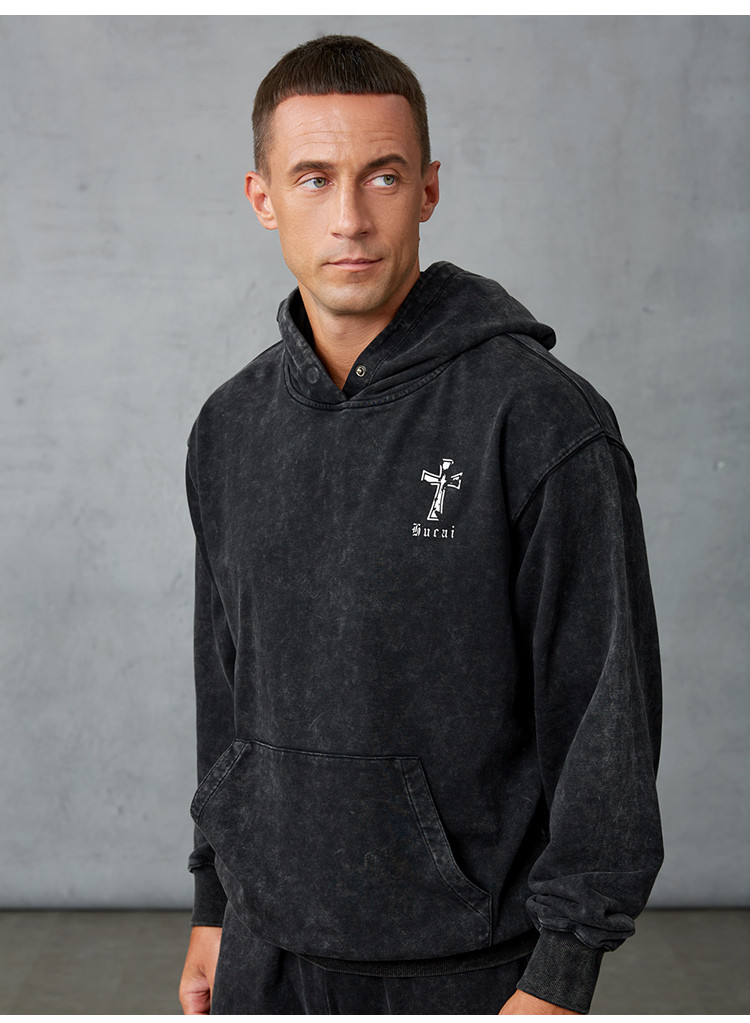
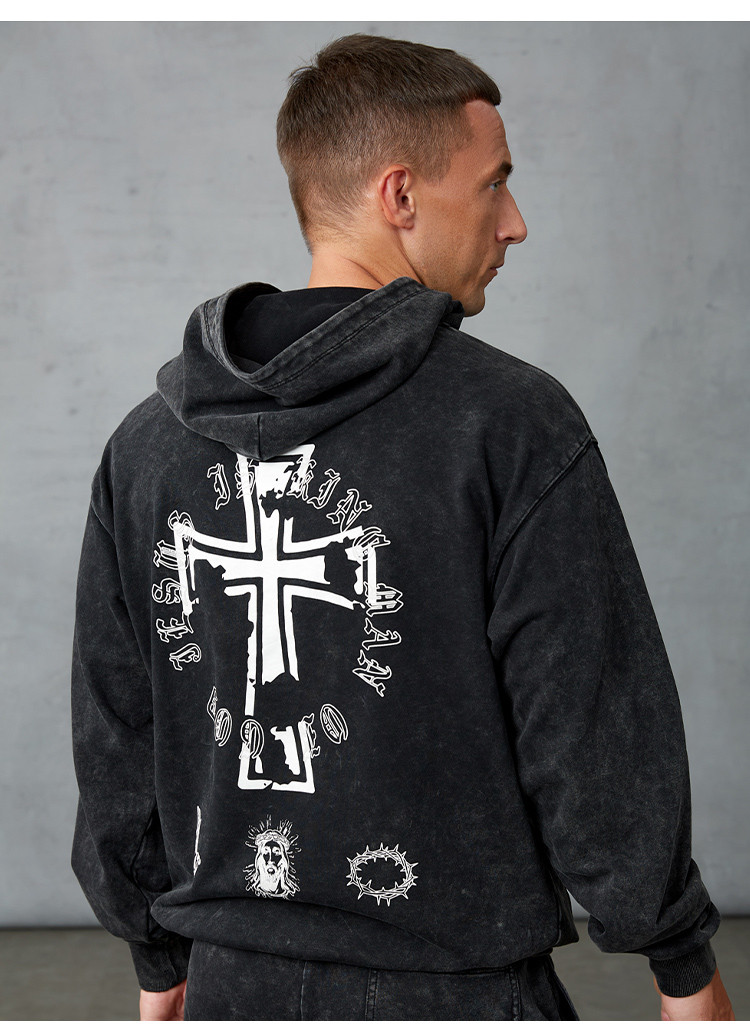
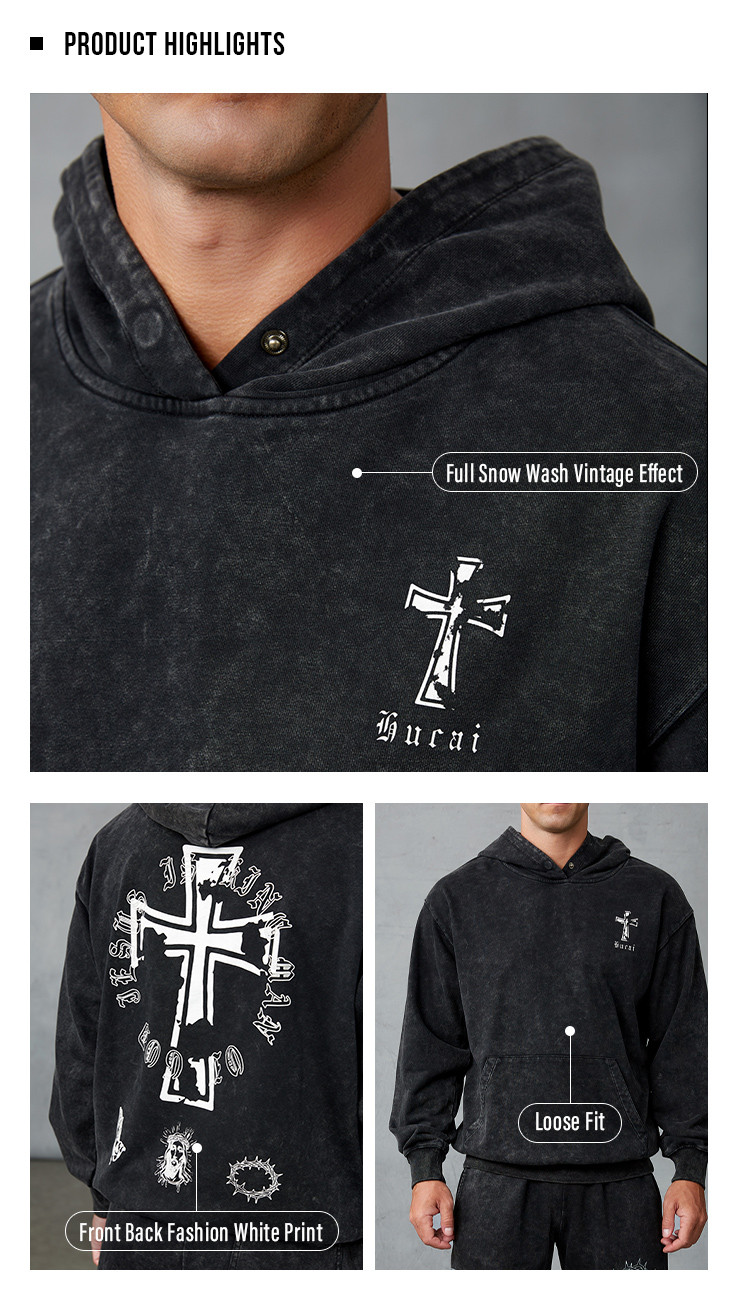
-Full Snow Wash Vintage Effect
-Front Back Fashion White Print
-Loose Fit
Suitable Application Scenarios
-Pre- and post-training layering
-Strength-focused gym sessions in cooler environments
-Autumn and winter performance programs
-Recovery-phase and rest-day wear
-Performance-lifestyle crossover collections
Functional Characteristics
-Mid-weight cotton-based knit with vintage snow-wash treatment
-Structured hood construction with controlled drape
-Ribbed cuffs and hem for silhouette stability
-Surface-treated fabric for softened hand feel
-Designed for repeat wear and long-term washing durability
Target Users
-Strength-training athletes
-Gym users preferring structured layering
-Brands targeting recovery and transitional training apparel
-Consumers drawn to performance-driven street aesthetics
Dyeing Process: Benefits and Technical Challenges
The vintage snow-wash effect provides a softened surface texture and subtle tonal variation that enhances visual depth while improving hand feel through controlled garment washing. Compared with standard reactive dye processes, snow-wash treatments create a broken-in aesthetic that aligns with strength-focused and street-influenced collections. However, achieving batch consistency is technically demanding. Variations in wash time, enzyme concentration, and mechanical abrasion intensity can significantly alter shade contrast and surface texture. Industry textile finishing reports indicate that wash-treatment variation as small as 3–5 minutes can result in visible color deviation between lots. Additionally, uneven abrasion during tumbling may affect seam stress points, requiring controlled process calibration to maintain structural integrity in bulk production.
How to contact us
➡️ Contact HUCAI today for your custom outerwear solution and connect with a team committed to premium quality and authenticity.